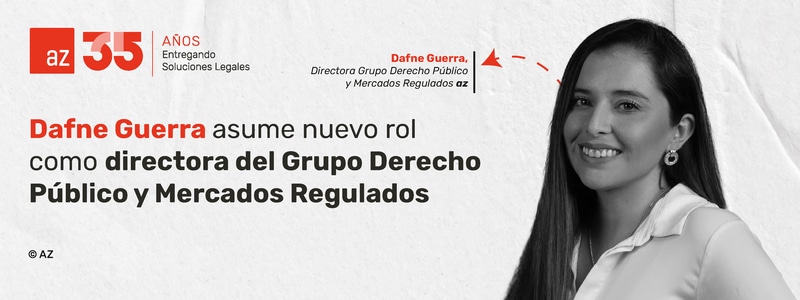
Federico Rodríguez, director of our Energy and Infrastructure Group, spoke with LexLatin about the implications of declining copper production in Chile and opportunities arising from the recent enactment of the National Reconstruction Law.
Copper mining in Chile is facing a difficult period. Amid rising global demand—driven by electrification, the boom in artificial intelligence, and other technologies—the world’s largest producer of copper is recording its lowest output levels in more than two decades.
The reasons for this decline are multifaceted. From an operational standpoint, the combination includes a marked decrease in the concentration of copper contained in the rock (lower ore grade), the depletion of traditional deposits, and delays in the launch of new initiatives.
Added to this geological decline and operational delays is a complex regulatory framework that hinders investment and the development of new mines. All of this without overlooking the geopolitical factor, marked by U.S. trade strategies, China’s processing monopoly, and the corporate challenges faced by major Chilean producers.
Geological Aging and Permitting
After more than a century of intensive mining, the aging of Chile’s copper mines is an inescapable reality that requires removing a greater volume of rock to extract the same amount of metal—and this significantly drives up production costs.
A recent comparative study by the Natural Resource Governance Institute indicates that extracting one metric ton of copper is now between 11% and 17% more expensive in Chile compared to other major competitors in the sector.
Beyond this inherent factor, other obstacles exist. From a legal standpoint, experts agree that the lack of certainty regarding permit processing timelines has acted as a brake on the replacement of production capacity.
“The current permitting system partly explains why the country has not been able to restore its production in a timely manner, given that obtaining authorizations is a critical aspect for mining projects, which must undergo an environmental assessment and secure a wide range of sector-specific permits issued by different agencies, with criteria that are not always uniform,” notes Javiera Cid, an associate at Cuatrecasas in Santiago.
Cid adds that an operational continuity initiative may require nearly 56 months of processing if evaluated through an Environmental Impact Statement (EIS), and up to 72 months if it requires an Environmental Impact Assessment (EIA), in addition to the potential legal challenge of the Qualification Resolution.
Other industry experts paint an even bleaker picture, noting that a mining project may require up to 400 permits and authorizations, with processing times exceeding five years. These lengthy delays drive up operating costs and extend the payback period—a critical factor for foreign investors.
Although environmental regulations play an essential role in the sustainability of mining and its social legitimacy, María Francisca Bannura, a senior associate at Cuatrecasas’s Chilean office, argues that the problem lies not in the stringency of the standards, but in the lack of predictability in their application: fragmented jurisdictions, overlapping sectoral authorizations, and excessive processing times.
“In an industry with long investment cycles, this uncertainty affects not only new production capacity but also the modernization of existing operations, including extension projects and technological improvements aimed at addressing lower ore grades and higher costs.”
Regulatory Uncertainty and Tax Certainty
Although Chile has one of the most robust legal frameworks for mining, in recent years various amendments have created regulatory and tax uncertainty, altering the conditions for the development of new projects.
Although he agrees with this assessment, Federico Rodríguez, director of the energy and infrastructure practice at the az law firm, notes that the recent enactment of Law No. 21,850 represents a significant step forward.
The law reinstates the tax certainty regime—providing up to 20 years of stability for large investment projects—and sends a clear signal of legal certainty to the industry.
“This mechanism is particularly relevant for the mining sector, given the large amounts of capital committed and the long investment payback periods. Together with reforms aimed at streamlining sector-specific permitting, it helps restore Chile’s appeal as a jurisdiction for the investments the sector requires,” he notes.
Rodríguez adds that the effectiveness of these initiatives will depend on the operational conditions for executing the projects, such as water availability (primarily through desalination), access to competitive energy, and infrastructure development—factors that are increasingly decisive in capital decisions.
Codelco and BHP: Two Views on the Business
After peaking in 2018, copper production in Chile has continued to decline. Part of this decline can be attributed to the situation at Codelco, the state-owned giant that until a few years ago was the world’s largest producer and is now facing a severe crisis characterized by high debt and governance issues.
In addition to lower ore quality, there have been operational setbacks: accidents that have halted or slowed down operations at key mines, weather-related contingencies such as floods, and, above all, delays in its infrastructure projects.
However, debt is the greatest challenge. Experts such as Ignacio Briones, former Minister of Finance, have gone so far as to point out that, if it were a private company, it would be bankrupt.
With accumulated debt nearing $26 billion, the state-owned company invests amounts greater than its tax contributions. In 2025, it made investments totaling approximately $5 billion, while its profits reached $2.423 billion. For the first time in more than 50 years, this amount was not transferred to the national treasury but was retained to strengthen its financial position, contain debt, and finance its project portfolio without resorting to further borrowing.

Despite this, analysts believe that debt is not the direct cause of the decline in production, but rather a consequence of aging mines, higher operating costs, and delays in projects essential to restoring production levels.
The private sector has also felt the impact of depleting ore deposits. This includes the Chilean subsidiary of Australia’s BHP, the world’s largest producer, whose production capacity fell by 3% in the fiscal year ending last June, compared to the previous fiscal year.
With its own financial strength and without Codelco’s balance sheet difficulties, BHP—accounting for about 38% of Chilean copper (nearly two million metric tons)—faces a shortage of large-scale greenfield projects, which threatens its long-term production expansion.
Trump’s Tariffs and China’s Dominance
Although demand continues to rise, the international trade environment has not been particularly favorable for copper. The return of protectionist measures and tariffs driven by Donald Trump has disrupted global supply chains, including those covered by free trade agreements (FTAs), such as the one in effect between Chile and the United States.
“The FTA between the two countries remains in effect and includes provisions on preferential market access, rules of origin, and customs procedures. However, these preferences do not automatically preclude the application of extraordinary trade measures adopted under U.S. law. In fact, U.S. restrictions do not affect concentrates, cathodes, and manufactured goods equally, so it is necessary to review the tariff classification of each good,” notes Federico Rodríguez.
Regarding China’s role in the global supply chain and allegations of tariff circumvention, the specialist points out that Chile is one of the leading exporters of concentrate, while China accounts for a substantial portion of smelting and refining capacity, in addition to having a powerful manufacturing industry.
In the analyst’s view, the sale of Chilean copper through third countries does not in and of itself constitute evasion. Therefore, a potential violation would depend on whether there is an incorrect declaration of origin, misuse of trade preferences, or any other conduct contrary to applicable regulations.
Furthermore, he emphasizes that cathodes (refined copper) receive differential treatment:
“Cathodes are currently exempt from U.S. sector-specific tariffs imposed on certain copper products; therefore, their refining in China does not, in and of itself, constitute a tariff circumvention. This distinction also reflects the limitations of U.S. trade policy, which has limited smelting and refining capacity and remains heavily dependent on imports of refined copper.”
Institutional Strategy and Long-Term Investments
Regardless of the trade tensions between Beijing and Washington, Chile will continue to play a leading role in the global copper market. Given that investment decisions in the industry are made with a multi-decade outlook, the sector anticipates a gradual recovery in the coming years.
Achieving this will require not only extracting greater volumes of ore but also ensuring an institutional environment with clear rules, streamlined processes, a solid trade strategy in the face of international geopolitics, and certainty for large capital flows.
In this regard, Rodríguez concludes that strategic decisions must distinguish between short-term business opportunities arising from geopolitical tensions and those investments that offer genuine long-term competitiveness and profitability.
“Tax stability, access to energy and water at competitive prices, and regulatory certainty will continue to be key factors in Chile’s ability to consolidate its strategic position in the global copper market.”